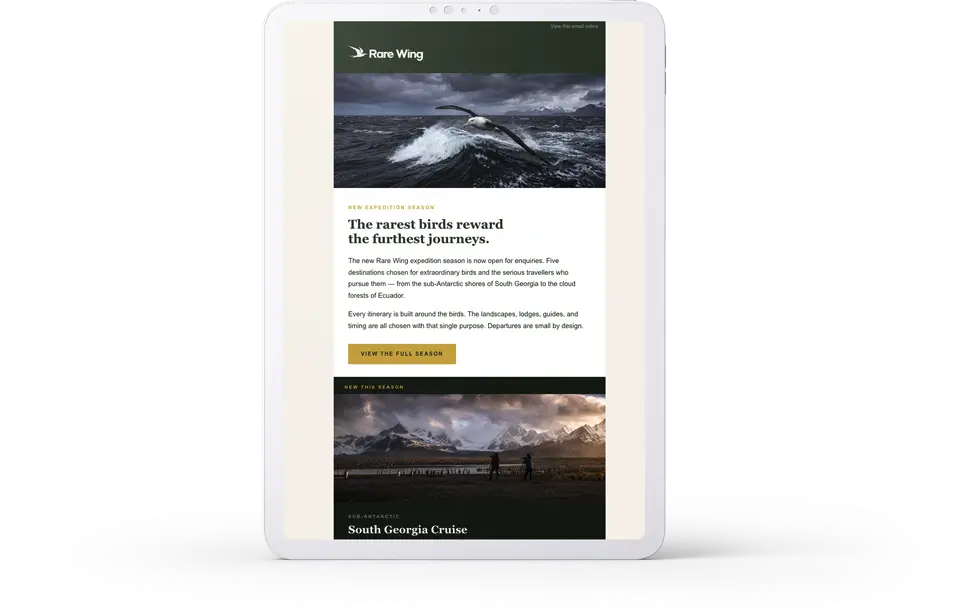
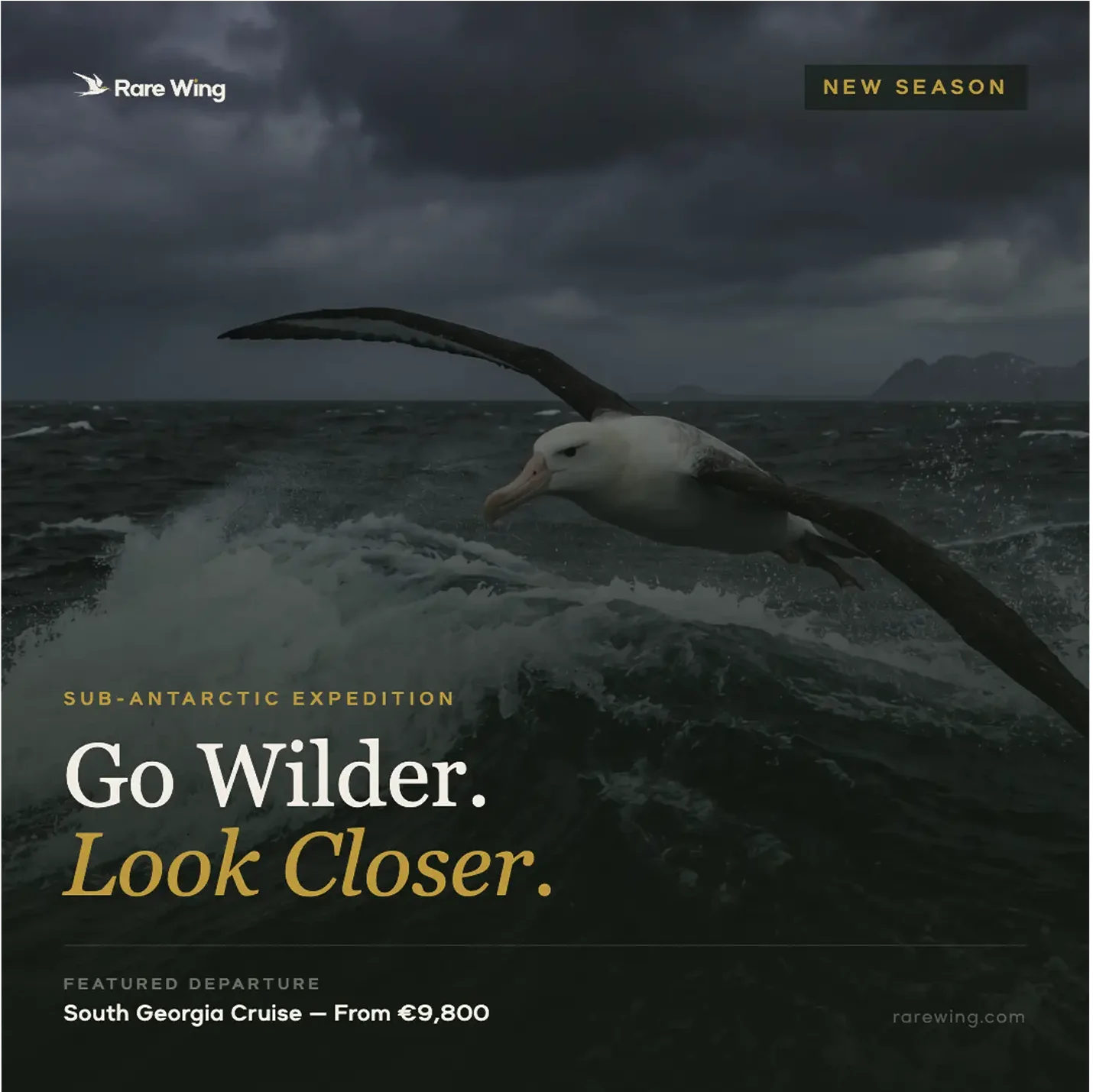
AI compressed what would have been days of work into a single session: brand strategy, name validation, species research, logo direction exploration, image generation across multiple models, and a production-ready landing page. The workflow is faster, more iterative, and — when used well — produces better-considered output than working without it.
Copy direction runs through the whole workflow, not just the email stage. Subject lines, destination descriptions, CTAs, campaign headlines — all drafted by AI, all edited and approved before use. The collaboration makes ongoing copy work fast: refreshing a campaign, testing a new angle, optimising underperforming subject lines. What used to mean a copywriter briefing and a round of revisions is now a prompt and a quick edit.
The same applies to the broader campaign. Edits, updates, and optimisations that would previously have meant reopening a brief are now a natural part of the conversation. The AI holds the context; the designer makes the calls.
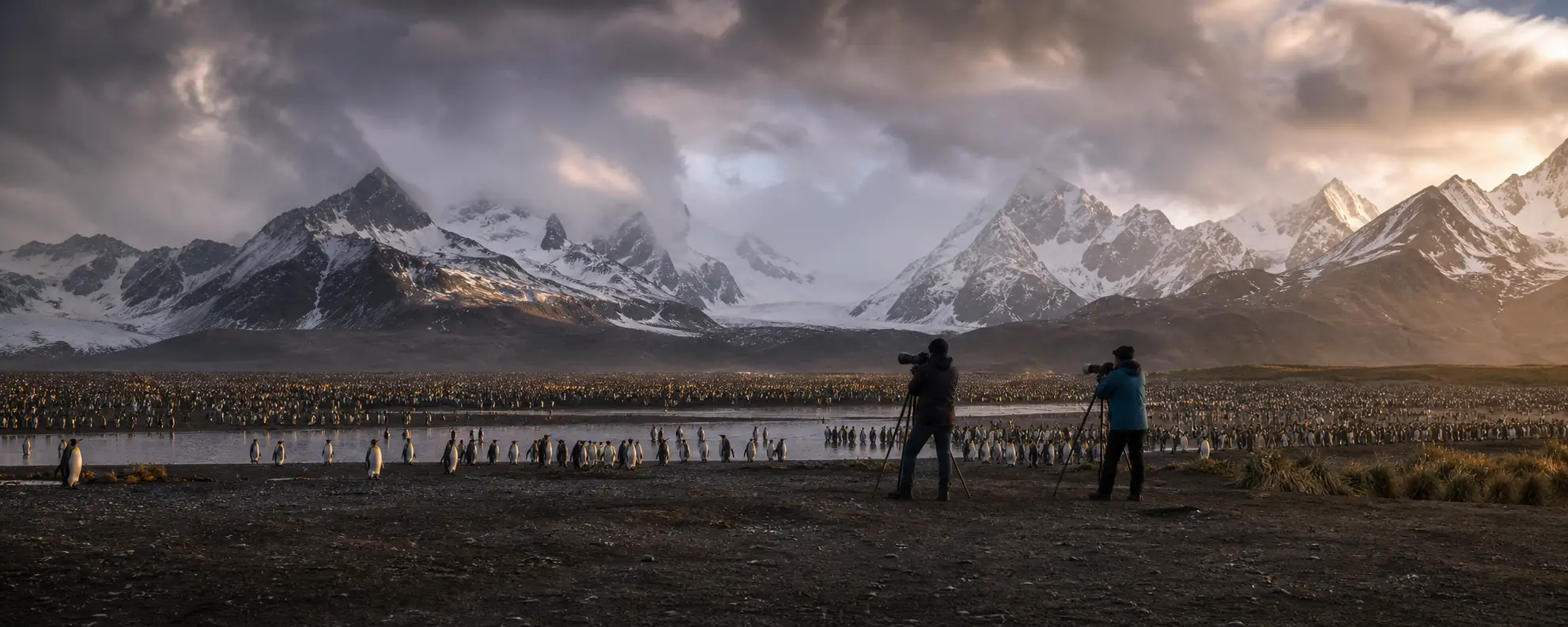
But AI didn't make the decisions that matter. It didn't choose the Arctic Tern. It didn't notice that a Gemini image showed a birder ignoring the bird. It didn't put a gold dot on the 'i'. Those were human calls — and they're the ones the brand lives or dies by.
The honest conclusion is not that AI replaces designers. It's that designers who understand how to use AI will replace designers who don't.